Friday, January 19, 2007

Within the Court of Monarchs, or, entering a world filled with wonder, mystery and transformation … all before noon!

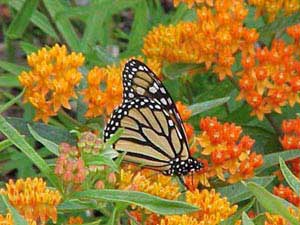
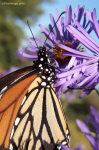
During our recent gathering of Leafing Through the Pages, the Sterling Morton Library’s book discussion group, we found ourselves immersed in a world filled with monarch butterflies compliments of Sue Halpern’s Four Wings and a Prayer: caught in the mystery of the monarch butterfly. Halpern shares with the reader the wonder and mystery of how these butterflies find their way (without compass, Rand McNally or MapQuest) into the mountains of Central Mexico to overwinter. Along the way in Halpern’s book, our group was introduced to a diverse community of people who have studied the butterflies and their amazing migration. Near the end of our spirited discussion, our thoughts and words turned to the transformation made by the monarch from egg to caterpillar to chrysalis to butterfly and how this transformation parallels ones made in our own lives!

The Sterling Morton Library has a number of resources on butterflies including field guides, children’s books and information on how to attract butterflies to your garden. Check the Library’s catalog for further information. In addition, the group viewed works from our rare book and art collections along with our collection of butterflies created by Sherman Foote Denton. This historic collection of actual butterflies and moths created in 1895 includes a number of native butterflies along with ones collected in India, South America and other exotic locales. These butterflies are frequently used by staff, teachers and guides for various Arboretum education/visitor programs and also within Arboretum exhibits.

Other sites to find out more information about these regal butterflies and their migration:


Wednesday, January 10, 2007

New Year! New articles of interest!

These are some recent articles that can be found within the journal collection of the Sterling Morton Library. Please visit the Library to discover the incredible botanical and horticultural resources that await you! If you are unable to visit the Library and interested in reviewing one of these articles, I would be delighted to help you at rhassert@mortonarb.org.

Abbs, Barbara. Renaissance riches. (Lake Maggiore lies amid the Alpine scenery of northern Italy. On two of its islands are spectacular historic gardens with different characters.) Garden, v. 132, pt. 1, p. 50-53.
Thinking/dreaming of Italy? What a wonderful destination to visit and revel in these special gardens.

Fisher, Celia. A work to wonder at: the creation of Stowe as a landscape garden. Hortus, v. 20, no. 4, p. 59-72.

Luzuriaga, Arantzazu. Population structure effect on reproduction of a rare plant : beyond population size effect. Canadian Journal of Botany, v. 84, no. 9, p. 1371-1379.

Outdoor Illinois - Special issue: Illinois Endangered and Threatened Species/ Remnant, Rare Habitats, v. 15, no. 1.

Pearson, Arthur. The latest invaders. (The emerald ash borer has arrived. What does it mean for our wild woodlands? And what about the next invader down the line?) Chicago Wilderness, v. 10, no. 2, p. 10-13.

Peltier, Patrice. For love of an elm. (How far would you go to save a mature American elm? And if you wanted to have a little garden beneath it, what would you plant? Here’s one professional’s solution.) Chicagoland Gardening, v. 13, no. 1, p. 50-53.

Smith, Kathy L. Reforesting without ash. (An extension associate in forestry recommends trees to take the place of ash in urban and rural forests ravaged by emerald ash borer.) American Nurseryman, v. 205, issue 2, p. 16-24.

Wright, Robert D. Ground pine chips as a substrate for container-grown woody nursery crops. Journal of Environmental Horticulture, v. 24, no. 4, p. 181-184.

Wednesday, January 03, 2007

Treasures on your bookshelves!

Recently while spending time standing in various supermarket checkout lines, I found myself skimming some of the covers of the publications on display. In one market, I noticed the usual tabloid fodder of stories about TomKat, Bigfoot and other assorted oft-maligned characters. On one late night shopping foray to a different market in pursuit of the elusive organic coconut extract, I noticed a slightly different mix of reading material that included fresh, new issues of Real Simple and Martha Stewart Living. On the covers of these magazines were hints about reducing clutter in our lives and organizing our spaces (life, work and otherwise). I was reminded of these cover stories on organizing for 2007 by an inquiry I received yesterday from someone interested in donating some books to the Sterling Morton Library.
The Library welcomes donations of resources relating to botany, horticulture, natural history, botanical art and the plant sciences. Honestly, we’ve received some wonderful materials for our collection from donations! After reviewing the donated items and our collection holdings and interests, we are sometimes able to add these donated books and journals to our collection. If the resource is a duplicate or does not fit within our subject interests, we make these items available to other botanical/horticultural libraries or add them to our book sale cart.
I always like to think of the act of donating resources to our Library as a way of passing forward a legacy. While you might not find a use/interest for a book, you might be surprised how welcome the item is to our collection. The legacy of the donation is that it will continue to engage and inform a future reader. So if you're thinking of organizing/decluttering your world and will be sifting through your bookshelves to pass on some of your books, please contact us!

"Some books are to be tasted, others to be swallowed, and some few to be chewed and digested."
Francis Bacon